
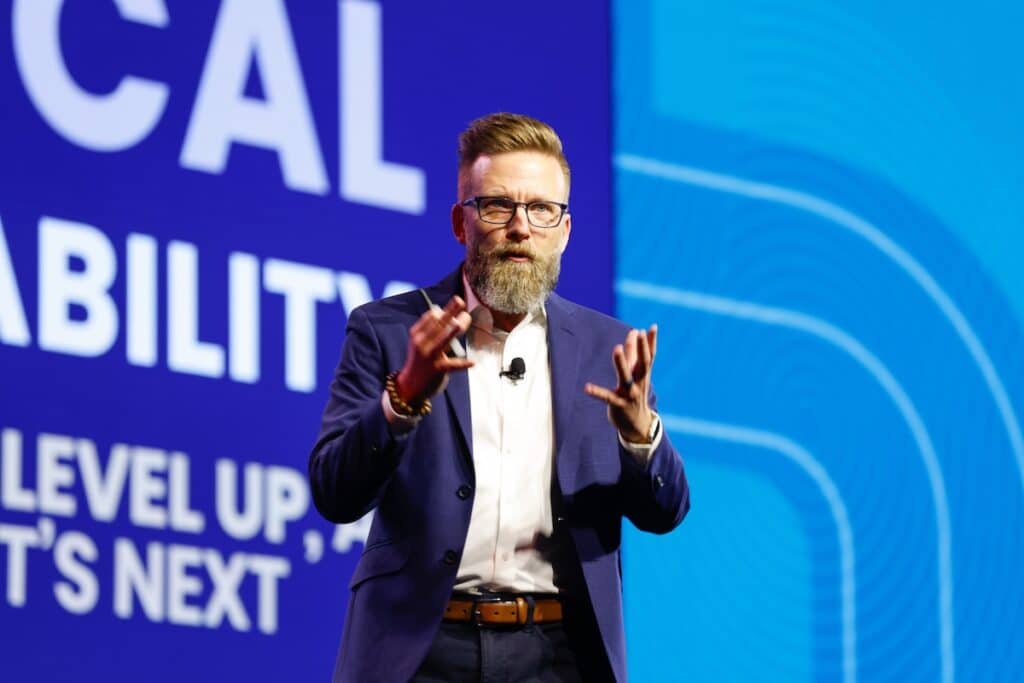
In every event I lead — whether it’s 50 people or 5,000 — I ask leaders one simple question:
“What’s one thing you know it’s time to END?”
And every time, the answers look like this:
- micromanaging
- overthinking
- saying yes too much
- the constant urgency
- perfectionism
- trying to do it all
- doubting themselves
Naming the behavior matters — it’s the beginning of change.
But it’s only the beginning.
Because once the behavior is out in the open, the deeper truth becomes clear:
It’s not the behavior that needs to end.
It’s the belief underneath it.
Because micromanagement isn’t the real problem.
Overwhelm isn’t the real problem.
Burnout isn’t the real problem.
Those are symptoms.
The root is always a belief.
The belief you must be everywhere.
The belief you must be right.
The belief you can’t say no.
The belief that you don’t belong.
I’ve been helping clients transform their teams for over 25 years — and every single breakthrough starts with identifying the belief that’s been quietly running the show.
Which is why this month’s Harvard Business Review cover story caught my attention.
HBR’s Insight Mirrors What I See Every Day
In her latest article, executive coach Muriel M. Wilkins identifies seven hidden beliefs that quietly sabotage even the smartest leaders:
- “I need to be involved.”
- “I need it done now.”
- “I know I’m right.”
- “I can’t make a mistake.”
- “If I can do it, so can you.”
- “I can’t say no.”
- “I don’t belong here.”
None of this surprised me — because this is exactly what leaders uncover when we do the Choose Your Ending™ work in a room.
But Muriel’s piece does something powerful:
It puts language to what thousands of leaders feel but rarely articulate.
It names the belief.
It brings it into the light.
It gives leaders a starting point.
And once you see the belief… you can end it.
Here’s What These Beliefs Actually Create
These seven beliefs are not small.
They drive patterns that quietly drain performance, trust, and clarity:
- “I need to be involved.” → micromanagement
- “I need it done now.” → urgency addiction
- “I know I’m right.” → defensiveness
- “I can’t make a mistake.” → perfectionism
- “If I can do it, so can you.” → resentment
- “I can’t say no.” → boundarylessness
- “I don’t belong here.” → impostorism
Leaders don’t get stuck because they lack skill.
They get stuck because these belief-driven patterns run on loop.
And here’s the part most leadership frameworks miss:
You can’t grow past a belief you refuse to end.
Ending the Belief Is the Beginning of Everything
This is the heart of Choose Your Ending™:
Change doesn’t begin with a new strategy.
It begins with a decision.
A decision to end the story that’s been holding you back.
Not more urgency.
Not more pressure.
Not more proving.
Not more involvement.
Less.
Simpler.
Lighter.
Truer.
Because ending a belief unlocks the very things leaders say they want:
Trust.
Clarity.
Confidence.
Courage.
Presence.
Better decisions.
Better teams.
Ending is not failure.
Ending is elevation.
Want the “How”? I Wrote That Last Week.
If you want a deeper dive into how real change works — the moment-by-moment process of shifting out of a belief — I break it down here:
Your Ending for Today
Choose one belief from HBR’s list — whichever one hits you hardest.
Speak the ending out loud:
“I end the belief that __________.”
Now…
ask yourself:
“If I release this belief, what becomes possible?”
That’s your new beginning.
This Is Exactly the Work We Do With Teams
If your leaders are navigating change, overwhelm, or transition, this is the work we do in my Choose Your Ending™ keynotes and workshops:
- Identify the belief
- Understand the cost
- End the belief
- Step into the payoff
- Build the behavior
- Anchor the transformation
If your team is ready for this kind of shift, reach out.
And tell me when you do:
Which belief ends today?